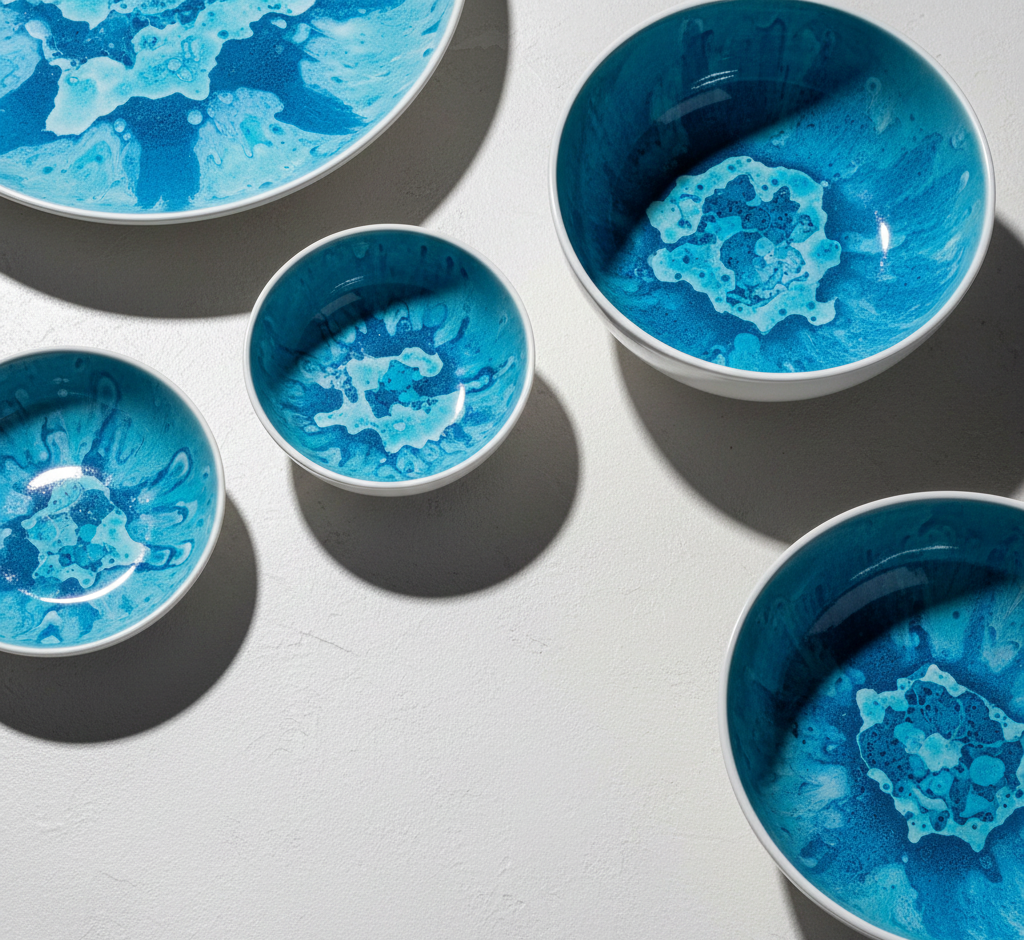
Introduction: The Secret Behind Khurja’s Special White Clay
Khurja’s special white clay is the biggest reason why Khurja has become Asia’s No.1 Crockery Hub.
Although clay is found in many parts of India, the clay used in Khurja pottery is completely different.
Why does it produce stronger, smoother, and export-quality ceramic products?
In this blog, we uncover the real secret behind Khurja’s white clay and explain the different clay types used in pottery
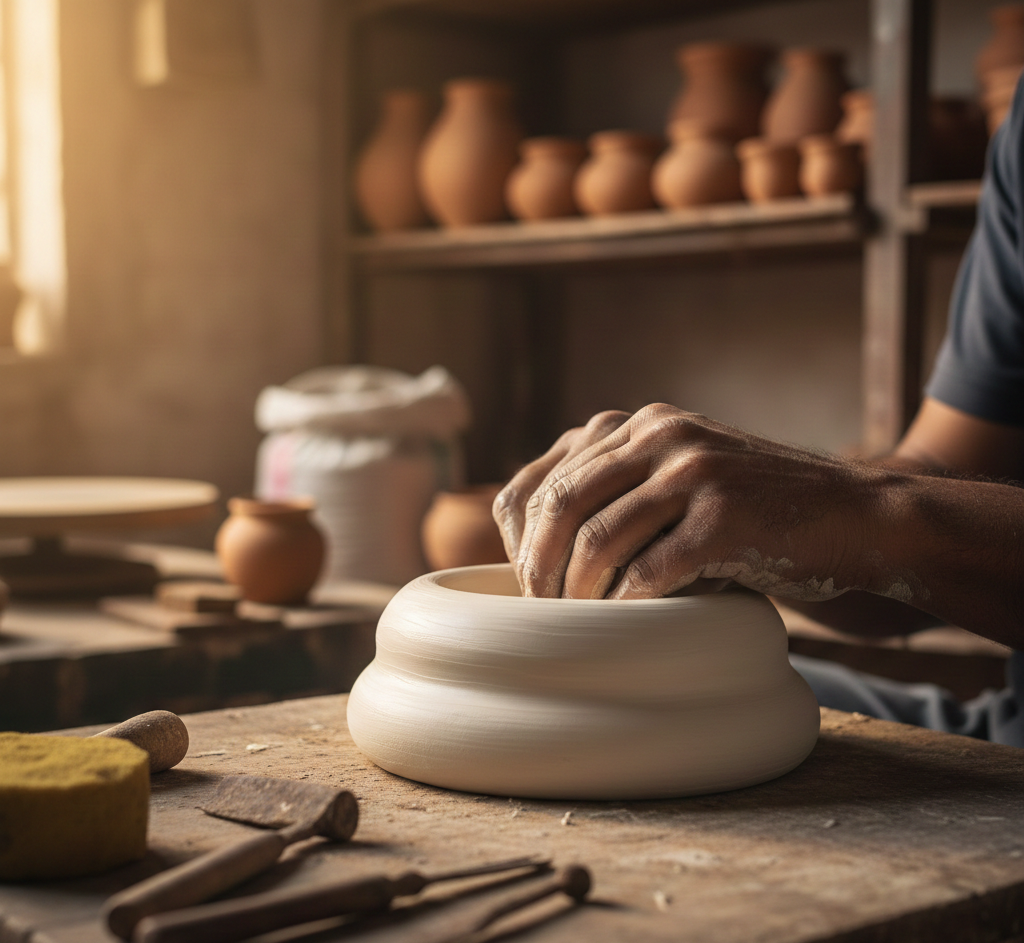
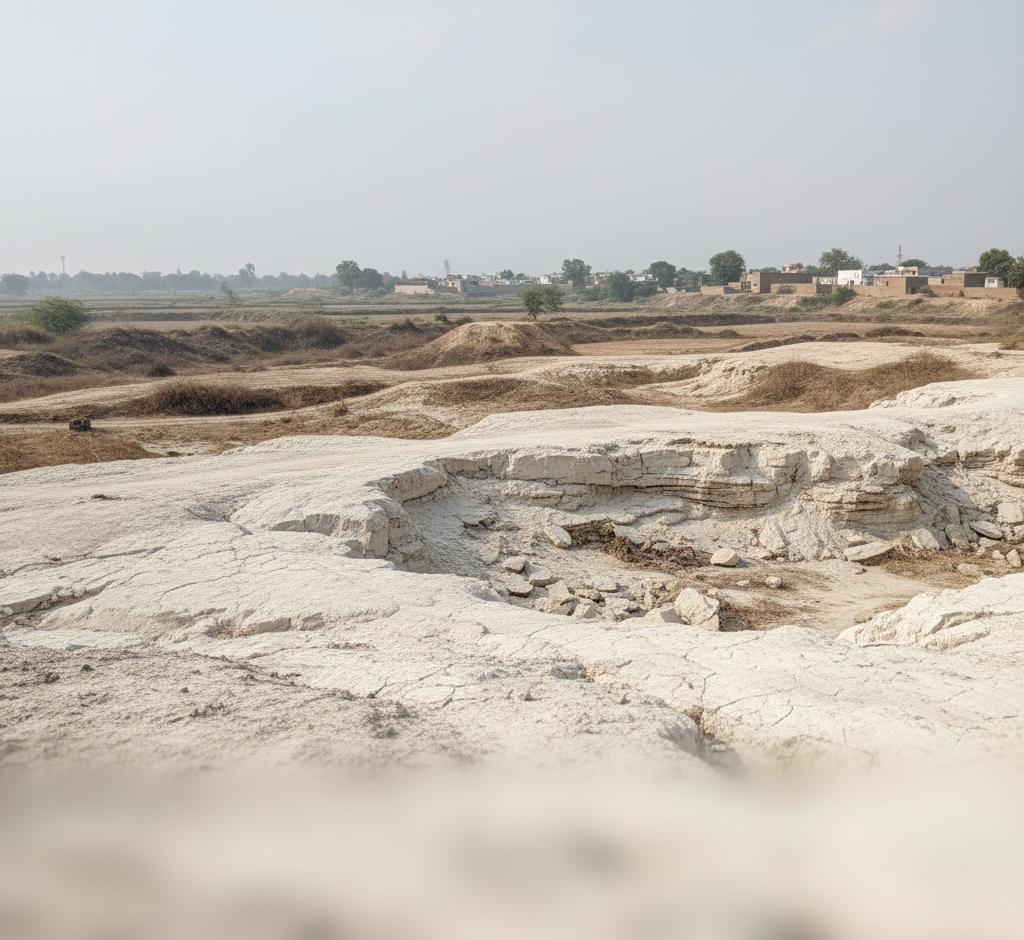
Where Does Khurja’s White Clay Come From?
Khurja is located in Bulandshahr, Uttar Pradesh, and the surrounding region contains low-iron, mineral-balanced white clay.
Because of its natural composition, this clay:
- Has a brighter white color
- Feels smoother during shaping
- Cracks less during firing
Therefore, it is ideal for ceramic crockery and fine pottery.
What Makes Khurja’s White Clay So Special?
Khurja’s white clay has unique physical and chemical properties that separate it from ordinary clay.
Key Characteristics
- Very low iron content
- High plasticity (easy to shape)
- Excellent heat resistance
- Uniform firing behavior
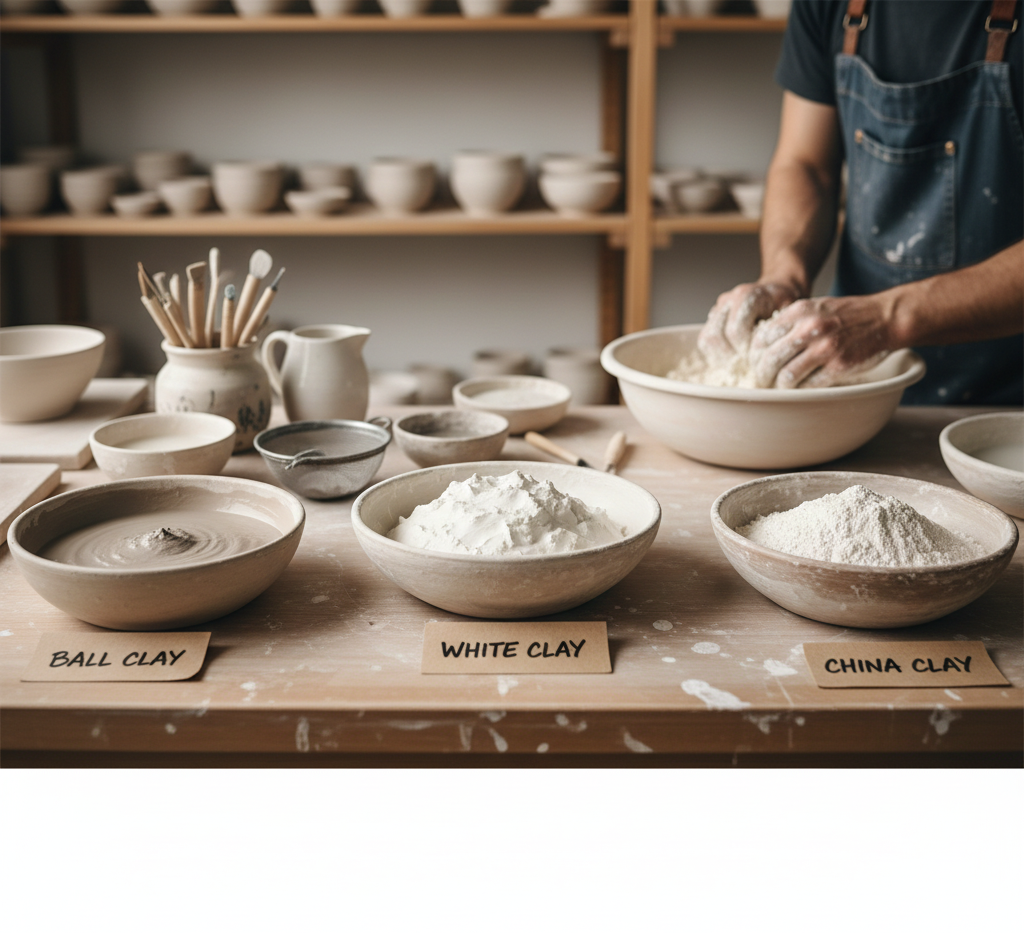
Types of Clay Used in Khurja Pottery
1. White Clay (Primary Clay)
2. Ball Clay
3. China Clay (Kaolin)
4. Fire Clay
High Firing Capacity: The Biggest Advantage
Khurja’s special white clay can handle firing temperatures between 1000°C and 1200°C.
Therefore:
- Crockery becomes food-safe
- Heat resistance improves
- Product life increases
White Clay and Glazing: A Perfect Match
When glaze is applied to Khurja’s white clay, the results are exceptional.
Colors like:
- Blue
- Green
- Turquoise
appear brighter and deeper.
The Real Secret of Export-Quality Pottery
Khurja pottery dominates the global market because:
- Clay quality remains consistent
- Every batch maintains the same strength
- Designs combine tradition with modern trends
As a result, Khurja pottery is exported to the USA, Europe, Middle East, and Australia.
Conclusion
Khurja’s special white clay is not ordinary soil.
It is the backbone of an industry that produces strong, beautiful, and globally trusted pottery.
If Khurja is Asia’s leading crockery hub today,
the real reason lies beneath the surface — in its clay.