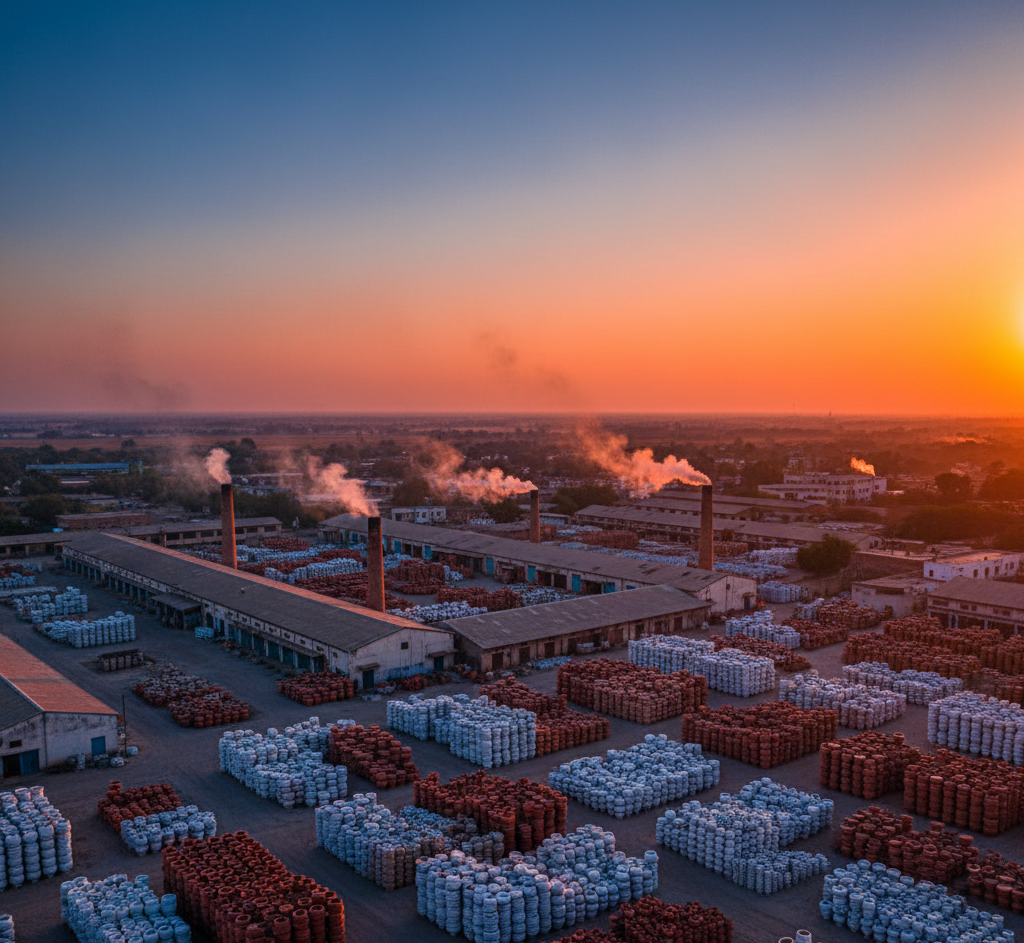
🌟 Introduction: Khurja Pottery History – A Legacy of 600 Years
Khurja Pottery History is one of India’s oldest and most admired ceramic traditions.
For more than 600 years, this art has turned ordinary clay into beautiful cups, plates, bowls, and décor items.
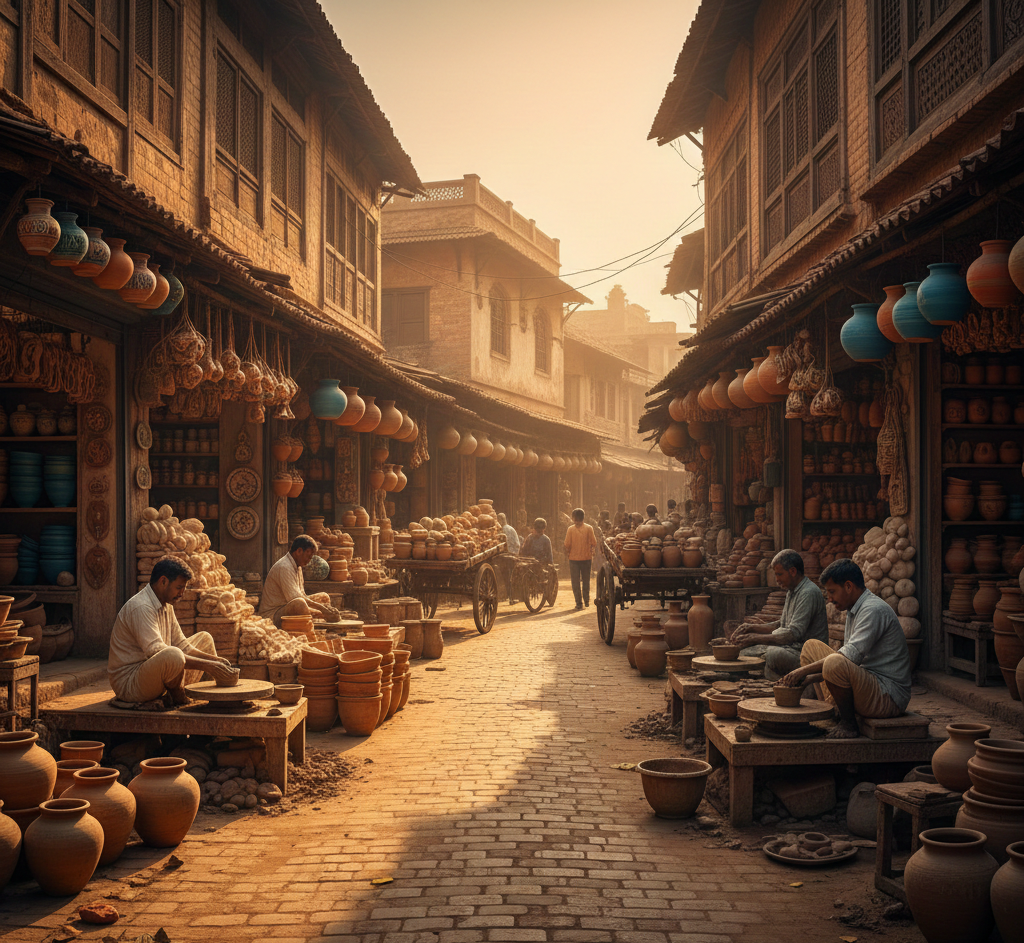
🌍 Where is Khurja and Why is it Special?
Khurja is located in Bulandshahr, Uttar Pradesh, near Delhi.
The soil around Khurja has rare white clay, rich in minerals and low in impurities.
Therefore, pottery made here becomes:
- Stronger
- Smoother
- More premium in finish
🕰️ Folklore: Did Timur’s Army Bring Pottery Here?
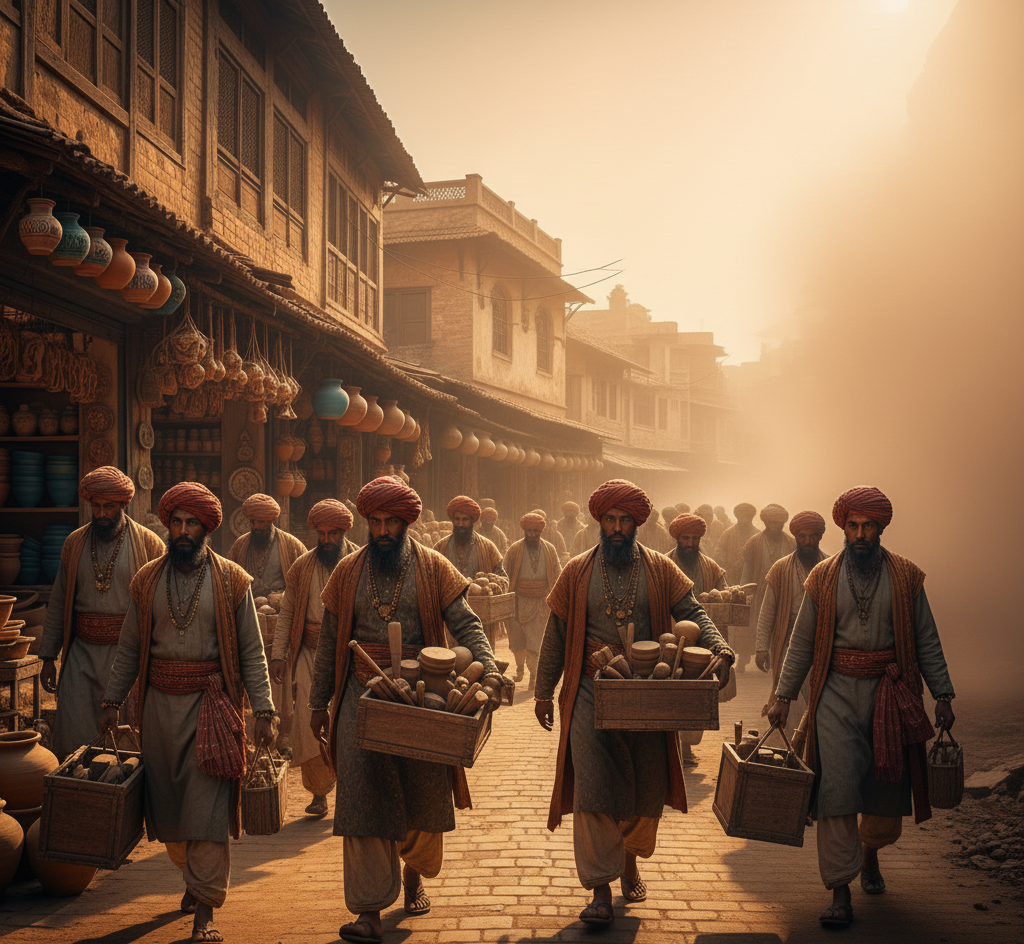
A local legend claims that during a historic battle, artisans from Timur’s army reached this region.
After the war, they settled in Khurja and introduced:
- Glazing techniques
- Enamel painting
- High-temperature ceramic making
🎯 The Real Truth of Khurja Pottery History
According to historical studies, Khurja Pottery evolved from a mix of:
✔ Local traditional wheel pottery
+
✔ Foreign glazing skills
As a result, the pottery made here became:
- More colorful
- More durable
- More artistic
This unique identity is still alive today and loved worldwide.
🏭 Industrial Revolution – Khurja’s Biggest Growth Phase
In 1942, the first modern pottery factory was established here.
Therefore, production shifted from small workshops to industrial scale.
This led to:
- New machinery
- Mass production capacity
- Export networks expanding
Today, Khurja has over 500 manufacturing units
making it Asia’s No.1 Crockery Hub 💪🔥
🌐 Today’s Export Market
Khurja Pottery is shipped to:
🇺🇸 USA
🇪🇺 Europe
🇦🇪 Middle East
🇷🇺 Russia
🇦🇺 Australia
In conclusion, this clay art has become a global pride of India.
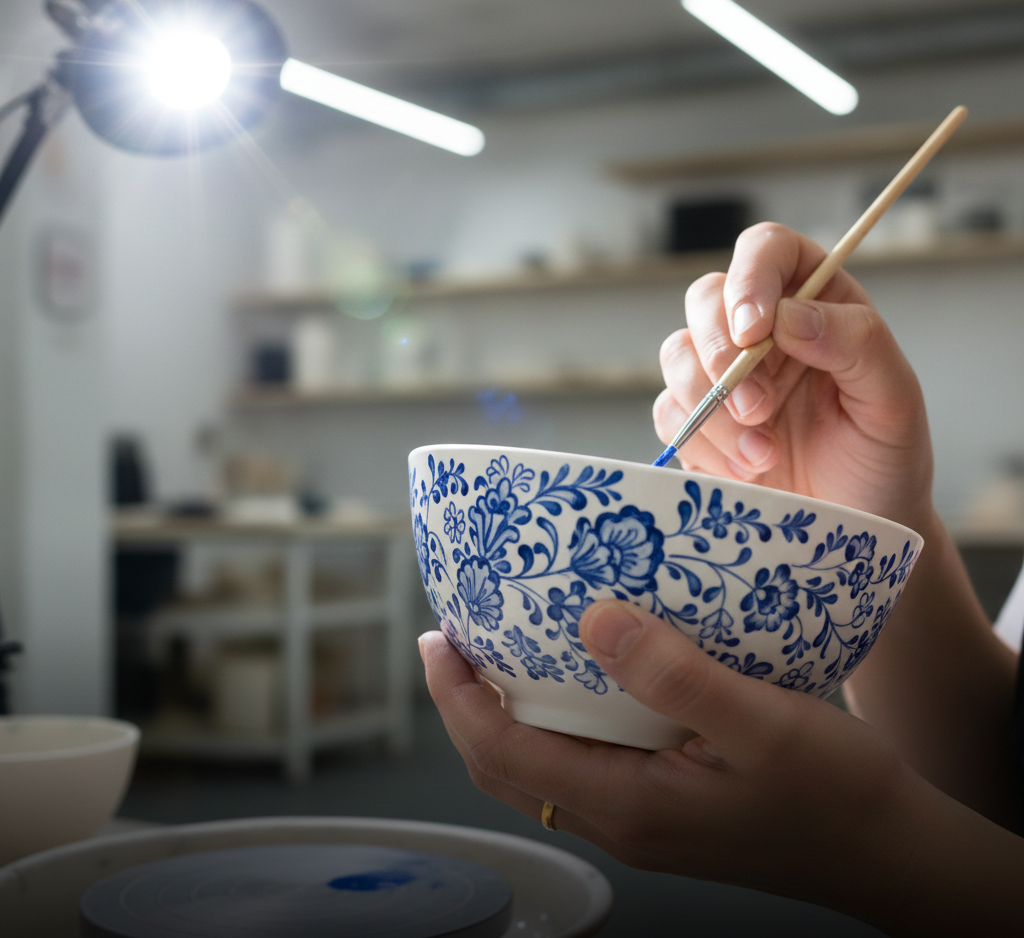
✨ Conclusion
Khurja Pottery History is not just about ancient clay…
It is about culture, creativity, and generations of skilled artisans.
Even after 600 years, the art lives on —
and continues to make Indian homes more beautiful ❤️